The IRS Sent One Man to Audit My $2.3 Million Tax Bill. Before He Opened a Single File, He Asked to See the Ranch on Horseback
I didn’t know what to say. So I got off my horse and stood next to him.
He told me everything. His father, a young cowhand from the German hill towns near Fredericksburg, hired by my grandfather. His mother, a girl from Ojinaga, cooking for twelve men on a wood stove. A baby born in the canyon in the spring of 1962, delivered by a ranch cook named Tía Chela.
They left when he was four, for San Antonio and a factory job. He grew up, became an accountant, and spent thirty-eight years with the Internal Revenue Service.
“When your file crossed my desk,” he said, “I saw the name of the ranch and I asked for it. My last case before I retire.”
“Why?”
“Because I wanted to see if it was still here.” He looked around at the canyon. “And because if anyone was going to tell you that your appraisal was wrong, I wanted it to be somebody who understood what you were trying to protect.”
Here is what happened next. I’m telling it the way it happened, not the way a movie would.
Herb wrote his report. The double-counted acres came out. The deduction was cut by more than half, and I owed real money: penalties, interest, and the tax itself. My attorney negotiated the rest. It hurt.
But Herb also wrote that the easement itself was legitimate, that the land was genuinely protected, and that I had acted in good faith on a professional appraisal. That one paragraph saved me from the worst of the penalties.
The appraiser’s insurance paid part of what his mistake cost me.
I didn’t sell a single cow.
The following spring, Herb Koenig retired.
I invited him for a ride. He came. He brought his wife, Esther, and his grandson.
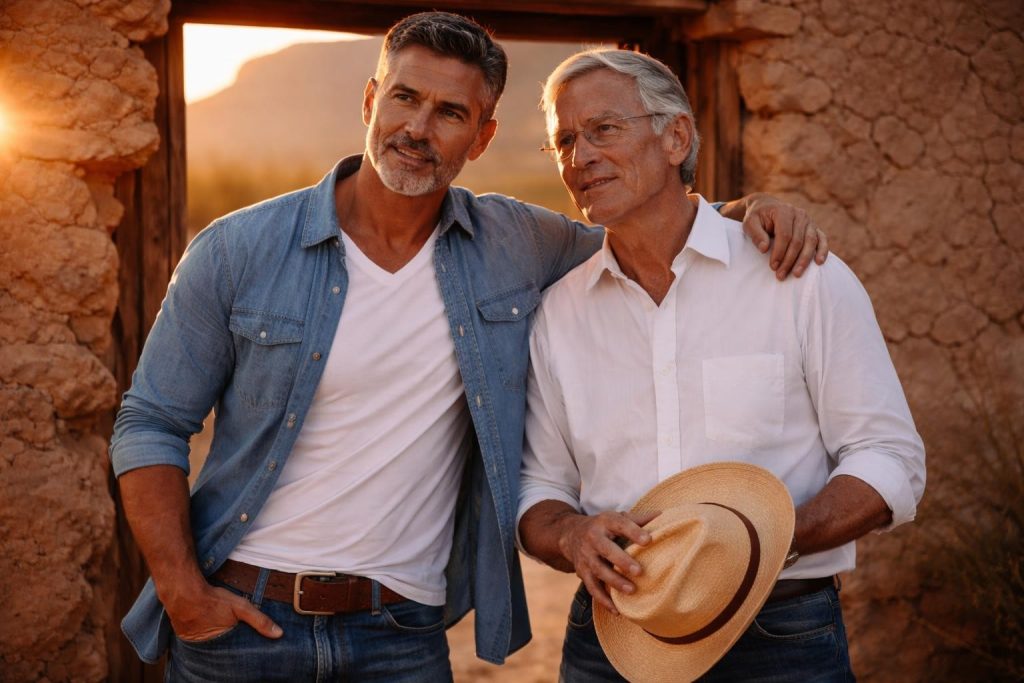
And at the end of the canyon, beside the spring, there’s a new roof on the old adobe house now. Three walls and a fourth one I built myself.
Over the door, carved in the lintel, it says: Koenig, 1962.
Herb stood in front of it with his hat in his hands.
“You didn’t have to do that,” he said.
“Neither did you.”