A Stranger Knocked on My Door With an 1889 Deed and Said 3,000 Acres of My South Dakota Ranch Belonged to Him
My father had known.
My father, who never told a lie in his life, had known for at least thirty-two years that three thousand acres of our ranch might not be ours.
And he had never said a word.
I didn’t sleep that night. At dawn, I drove out to the river bottom and walked the line Wade Okerlund’s surveyor had drawn.
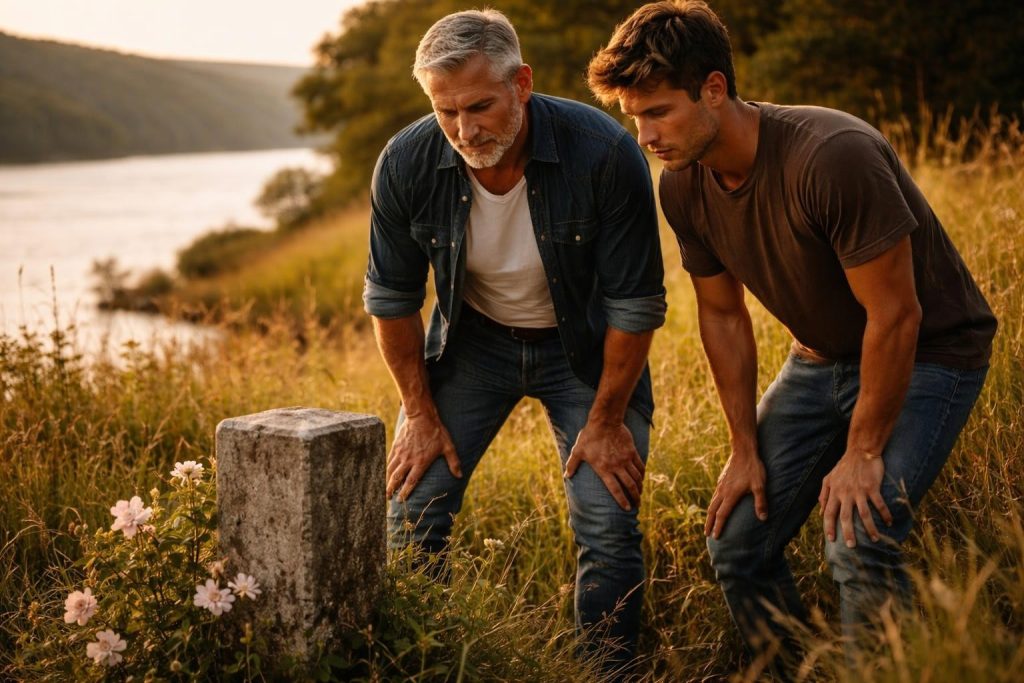
Halfway along it, in the tall grass near the bluff, I found something I’d walked past my whole life without seeing.
A stone. Knee high, square, half sunk in the earth. Someone had chiseled two letters into it a long time ago.
*N.O.*
And at the foot of the stone, recent, neatly kept, a small cluster of wild roses.
My mother had planted those. I remembered now. Every spring, when I was a boy, she would walk down here alone with a trowel.
I called my aunt Marit in Sioux Falls. She was ninety-one and still sharp as a tack.
“Oh, Ansel,” she said, after a long silence. “So it finally came out.”
“Aunt Marit, what is the Okerlund land?”
“It’s a grave, honey,” she said. “Nils Okerlund homesteaded that river bottom in 1889. His wife and two little ones died in the winter of 1890 and he buried them there by the river. He went back to Minnesota a broken man and never came back.”
“And Dad knew the land was still in their name?”
“Your grandfather knew. Your father knew. Your mother knew.” She sighed. “Your grandfather always said, ‘We farm it, but it isn’t ours. We just keep it for them.’ And your mother said if anybody ever came looking, we’d do right by them.”
I hung up the phone.
Then I got in my truck and drove to the motel in Pierre where Wade Okerlund was staying.
He opened the door in his socks. There were papers all over the bed.
And a letter from a bank in Minnesota, on the top of the pile, with a big red stamp.
*NOTICE OF FORECLOSURE.*