My Sisters Wanted to Sell Our Family’s Texas Vineyard for $2.4 Million. Then a Woman Showed Up for Harvest at Midnight and Asked to Pick the Rows Her Father Planted.
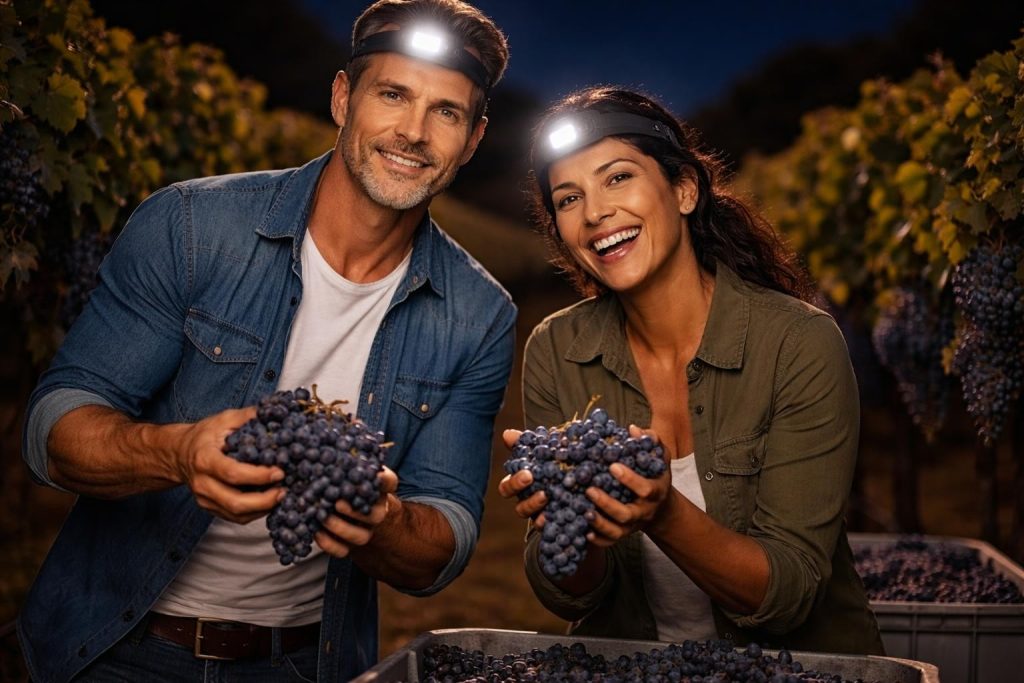
Her name was Dahlia Montemayor. She was forty-nine, and she worked as a winemaker for somebody else’s winery in California.
We sat on the tailgate of my truck while the crew took a break, and she told me the story.
In 1981, her father, Efraín, owned this hill. He grew peaches. A hailstorm wiped out his crop, and he fell two payments behind on his loan. The bank called the whole loan due in thirty days. He couldn’t pay. The land went to auction on the courthouse steps.
My father was on the board of that bank.
My father bought it at the auction. Eleven thousand dollars.
“My family moved to California,” Dahlia said. “My father picked grapes in Napa for twenty years. I grew up in the rows. He died last year. He always talked about this hill. I just wanted to see it once. Then I heard you needed pickers.”
“I’m not here to sue anybody,” she added. “There’s nothing to sue. It was legal.”
I didn’t know what to say. My father told this story differently. A failing orchard. A lucky deal. He never said the man’s name.
The next day, I went through Dad’s filing cabinet. Way in the back, in a brown envelope, was the auction receipt. Eleven thousand dollars. Efraín Montemayor.
I sat on the floor of his office for a long time.
Dahlia stayed for the whole harvest. Two weeks. She slept at the motel on Main Street and picked every night.
At four in the morning, when we finished, I’d buy breakfast tacos for the crew, and she and I would eat ours on the tailgate and watch the sun come up over the hills. She laughed at my jokes even when they weren’t good. She told me about her father teaching her to smell when a peach was ready from ten feet away.
On the last night of harvest, I called my sisters.
“We need to talk before we sign anything,” I said.
Liesel sighed. “Bastian. What do you want to do? Give it back?”
I looked out at the crooked rows.
“Maybe,” I said.